
Earlier this year, I paused non-brand paid search campaigns for one of my clients during February and March. This decision wasn’t arbitrary—it was based on historical seasonal data indicating low performance during these months. It simply didn’t make sense to invest in paid search when previous years clearly showed minimal returns in this period.
However, as April approached—the time we had initially planned to restart these campaigns—someone from the client’s team raised a critical question: “Pipeline has been good in Q1, so why should we turn paid search back on?”
It was an insightful question and sparked an important discussion. After all, if a business is growing and profitable without additional spend, why reintroduce paid search at all?
Let me share why, after careful analysis, I recommended turning the paid search campaigns back on—and why pausing them longer might have posed a bigger risk than initially realized.
1. Seasonal Performance Matters
Historical data is a marketer’s best friend, especially when dealing with seasonality. Looking closely at the performance data from the previous year’s second and third quarters revealed something significant: Paid search was not only profitable but also played a key role in generating sustainable growth.
In other words, the seasonal dip experienced in February and March didn’t extend into April through September. Instead, the opposite happened. Paid search during these warmer months historically boosted pipeline generation and overall conversions, indicating a significantly lower risk of investment.
More importantly, historical performance metrics gave us confidence that turning campaigns back on would lead to similar—or even better—results this year. Why better? Because each campaign we run provides valuable insights, making subsequent campaigns smarter, more targeted, and more efficient. Simply put, the insights we’ve accumulated since last year’s campaigns set us up for greater success.
But beyond the direct, immediately measurable returns, there’s another critical piece to consider:
2. The Hidden “Demand Generation” Impact of Paid Search
At face value, paid search campaigns typically get judged on their immediate results. Marketers, stakeholders, and executives often focus on the number of leads directly attributable to a specific campaign. While important, this approach overlooks the nuanced ways paid search contributes to the broader buyer journey.
Before this discussion arose, I had just completed an analysis focused on pipeline sources and deal win rates across Q4 and Q1. What emerged from this analysis was intriguing: pipeline attributed to “direct traffic” in our client’s CRM saw a substantial drop when we paused paid search.
Initially, this correlation might seem coincidental, but a closer look at our limited 2024 data showed something else entirely. A significant number of deals labeled as “direct traffic” actually began with initial site visits from non-brand paid search ads. These visitors may not have converted immediately, but their initial interaction with paid search laid the groundwork for future engagement.
This led to a pivotal realization:
Even when paid search campaigns didn’t yield immediate, direct-response leads, they were still crucial in generating downstream opportunities. Essentially, paid search was quietly working in the background, driving meaningful interactions and keeping our client’s business top-of-mind, ultimately leading to direct visits and conversions at later stages of the buying journey.
The drop in direct traffic pipeline during our paid search pause was further validation of this hypothesis. This indicated that turning off paid search risked more than short-term numbers—it endangered the pipeline in the upcoming quarters.
Understanding Short-Term Decisions and Long-Term Consequences
The reality is this: paid media decisions don’t merely impact the present—they shape the future. While it’s tempting to look only at immediate ROI or pipeline performance, marketers must also consider how current choices will ripple into future months or even quarters.
After I presented this evidence and reasoning, our team quickly aligned on the decision to resume the paid search campaigns as initially planned. And here’s the encouraging news—we’re only a few weeks into April, and the early data already supports this decision:
- Pipeline Growth: Since reactivating the campaigns, we’ve noticed a tangible uptick in the overall pipeline.
- Positive Leading Indicators: Direct traffic and branded search volumes, two leading indicators closely tied to paid search activity, have both risen noticeably.
These results highlight that pausing and restarting paid search isn’t simply about the immediate month’s budget or performance. The true value—and the true risk—lies in how these decisions impact future growth.
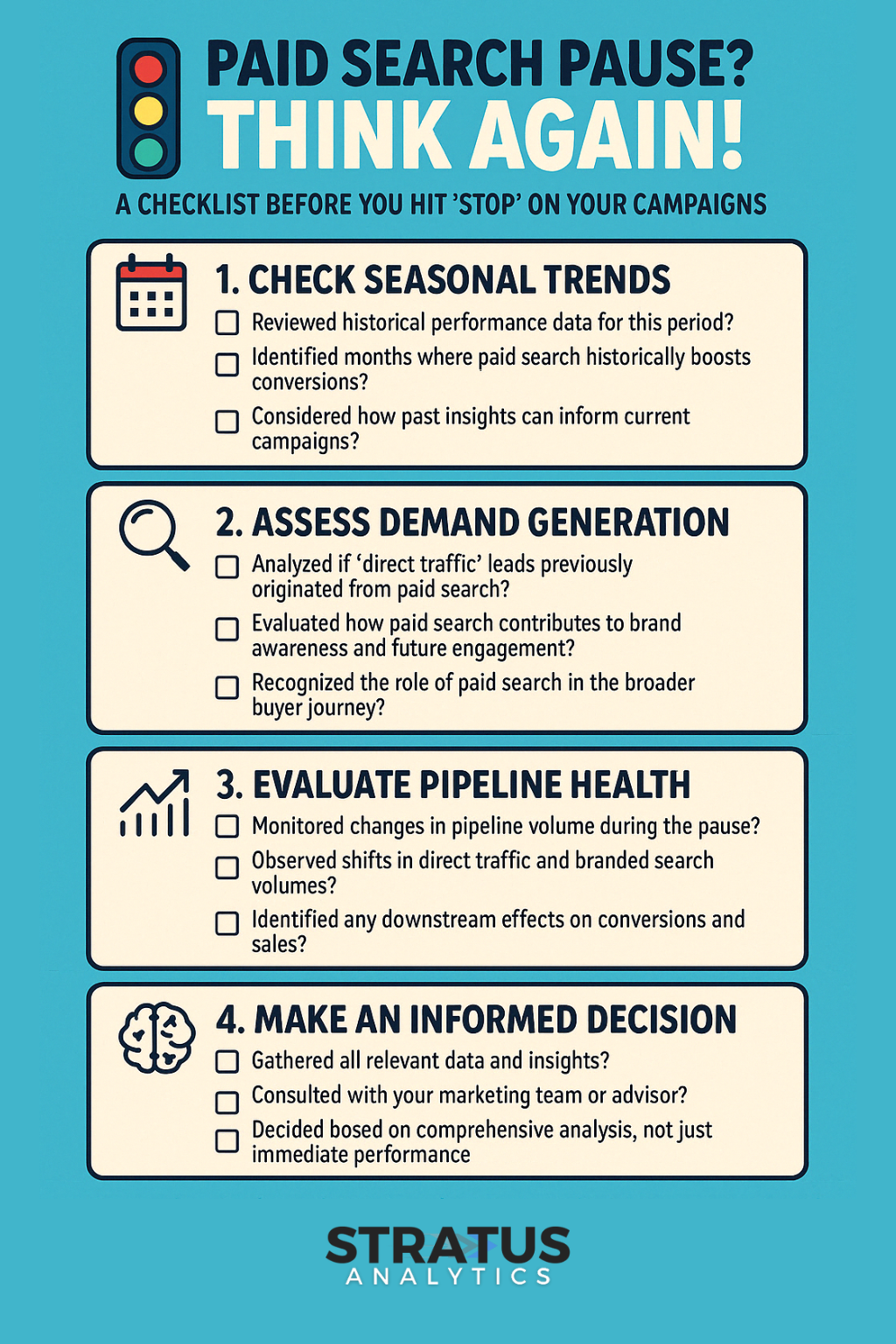
Key Takeaways for Your Paid Search Strategy
As marketers, we need to expand our thinking beyond monthly reports. Here are three lessons to remember from this experience:
- Seasonality Is Your Guide: Historical data helps predict performance. Use seasonal data to inform smarter budgeting and spending decisions.
- Consider Hidden Impact: Don’t underestimate the indirect effects of paid search. It plays a crucial role in demand generation, nurturing prospects who convert later through other channels.
- Think Long-Term: Every choice you make about paid search spending shapes future performance. Short-term savings might translate to long-term losses if pipeline development stalls.
Ultimately, the risks of switching paid media off and on aren’t confined to immediate outcomes. They significantly influence your business’s future pipeline and revenue potential. Keeping campaigns running—strategically paused or optimized based on seasonal data—helps maintain steady visibility, continued growth, and reliable future outcomes.
By carefully balancing immediate results with long-term impacts, we can make smarter, data-driven decisions that strengthen overall marketing performance. It’s not about spending blindly, but rather investing strategically to ensure your business doesn’t just succeed today but thrives tomorrow.

Hi there! I’m Scott, and I am the principal consultant and thought leader behind Stratus Analytics. I have a Master of Science degree in marketing analytics, and I’ve have been providing freelance digital marketing services for over 20 years. Additionally, I have written several books on marketing which you can find here on Amazon or this website.
DISCLAIMER: Due to my work in the packaging industry, I cannot take on freelance clients within the packaging manufacturing space. I do not want to provide disservice to your vision or my employer. Thank you for understanding.