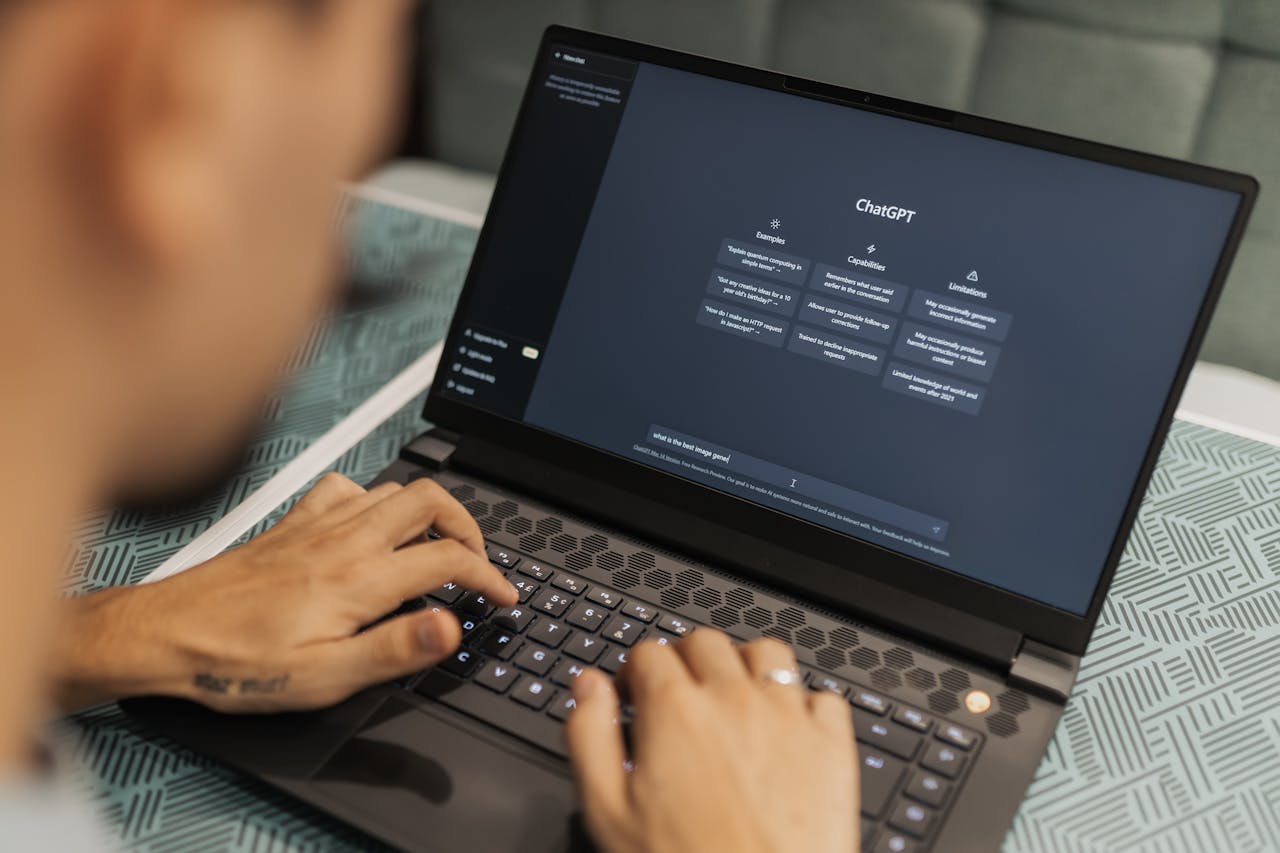
A major shift is coming to the world of AI assistants and conversational search: OpenAI is beginning to roll out ads inside ChatGPT.
Until now, ChatGPT has primarily been known as an ad-free tool that provides direct, conversational answers.
But starting in 2025, users will increasingly encounter ads as part of their ChatGPT experience—particularly when browsing is enabled or responses pull data from external sources.
This change could dramatically reshape how marketers think about AI-driven customer journeys, search engine advertising, and even broader digital media strategy.
Here is what we know about ChatGPT with ads so far, why it matters, and what brands need to start preparing for today.
The Basics: How Ads Are Coming to ChatGPT
OpenAI has confirmed that it is beginning to test ad placements inside ChatGPT for users who have enabled the “Browse with Bing” feature.
Right now, these ads appear modestly:
- They may surface as sponsored links alongside browsing-sourced information
- Ads are drawn primarily from Microsoft Advertising’s network (leveraging Bing’s infrastructure)
While the rollout is currently limited, the implications are huge.
As ChatGPT usage continues to grow, OpenAI appears committed to monetizing the platform—following a similar path to how traditional search engines like Google and Bing operate today.
Why ChatGPT Displaying Ads Matters for Marketers
The introduction of ads into ChatGPT is not a minor update—it signals a major evolution in the intersection of AI and advertising.
Here are three reasons why marketers should pay close attention:
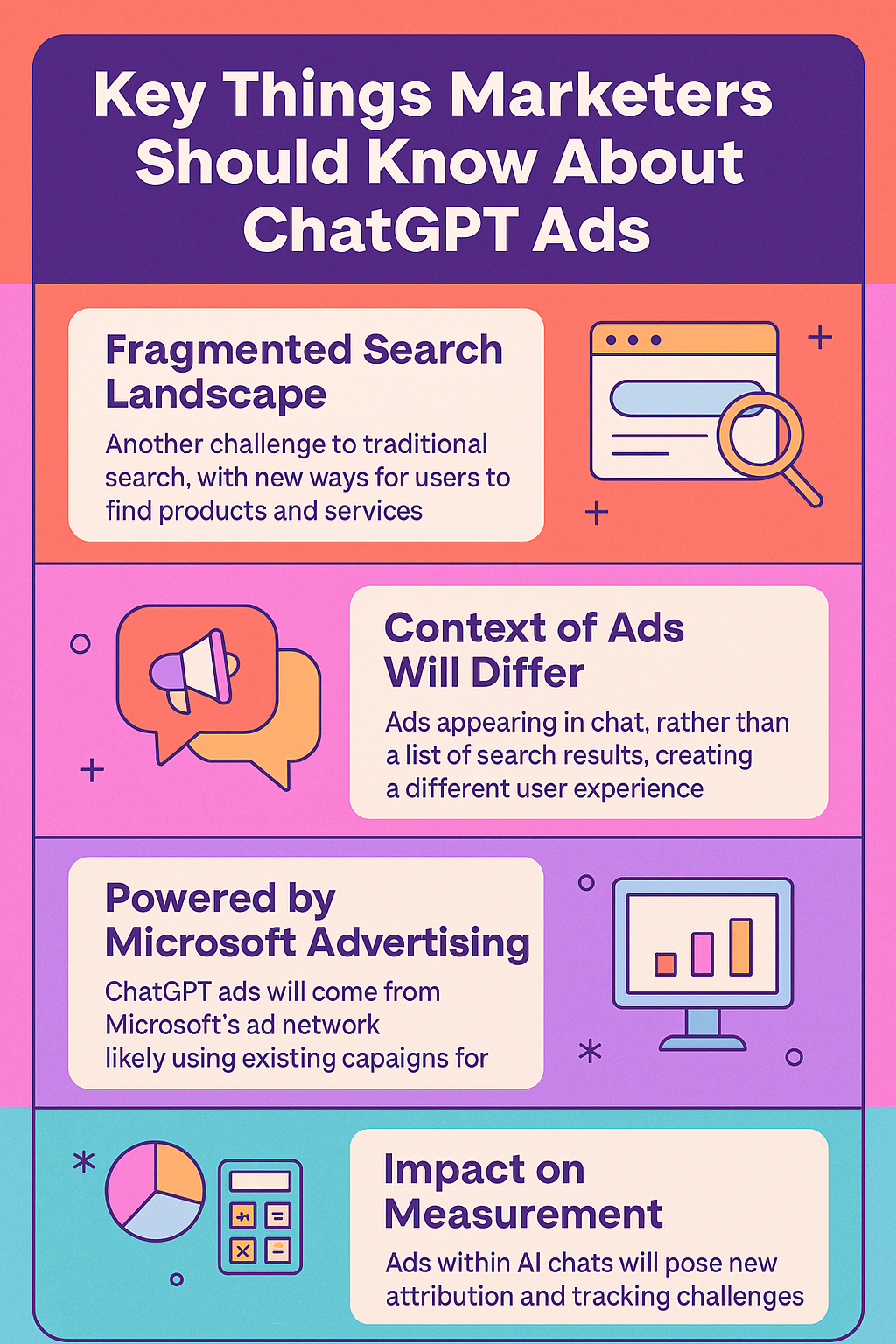
1. The Search Landscape Is Fragmenting Further
For decades, Google dominated search-based advertising. Even with Bing and emerging players, Google Search Ads remained the primary channel for reaching intent-driven audiences.
ChatGPT with ads represents another major front in the fragmentation of the search experience.
Users now have a new way to discover information—and products—outside of traditional search engines.
Marketers will soon need to think about:
- Optimizing for AI-assisted search experiences
- Bidding for placements inside chat-based conversations
- Tracking attribution when user journeys start inside AI tools
It will not be enough to dominate traditional SERPs anymore.
2. Ad Context Will Look Very Different
Unlike traditional search ads, which are triggered by typed queries on a results page, ChatGPT ads will live inside conversations.
That changes everything about:
- Creative strategy: Ads may need to feel more like helpful recommendations than sales pitches
- Targeting: Contextual relevance to the user’s conversation will be critical
- Measurement: Click-through and conversion behavior may differ from classic search metrics
Advertisers who understand the nuances of conversational engagement will have an advantage as this format matures.
3. AI Search Ads Could Expand Rapidly
Although the current test rollout is small, OpenAI’s growth trajectory suggests ChatGPT advertising could scale quickly.
Consider:
- ChatGPT surpassed 180 million users by early 2025
- Microsoft is tightly integrated with OpenAI through its partnership and funding
- Other AI platforms like Perplexity, Anthropic, and even Google’s Gemini are exploring ad models
Within the next 12–24 months, advertising across AI-driven assistants could become a standard part of paid media strategies—just like Google Ads, Meta Ads, and LinkedIn Ads are today.
How ChatGPT Ads Will Likely Work for Advertisers
Details are still emerging, but based on OpenAI’s announcements and Microsoft Advertising’s involvement, here is what seems most likely:
- Inventory Source: ChatGPT will tap into Bing’s Microsoft Advertising platform for ad supply
- Placement: Ads may appear as sponsored links in-line with chat responses when browsing is active
- Targeting: Expect keyword, audience, and contextual targeting similar to existing Microsoft Advertising options
- Attribution: Initially simple (clicks), but potentially evolving toward view-based and conversation influence metrics
Importantly, advertisers likely will not have to build separate campaigns for ChatGPT immediately.
Instead, campaigns running on Bing Ads may automatically extend reach into ChatGPT placements, with reporting and bidding options developing over time.
Strategic Considerations for Marketers
If you are thinking about the future of your paid media strategy, here is how to start preparing for ChatGPT with ads.
1. Monitor Microsoft Advertising Updates Closely
Since Microsoft Advertising is the primary supply engine for ChatGPT ads, it is crucial to:
- Stay informed about new campaign types, targeting options, and reporting metrics
- Participate in any available beta programs for ChatGPT-specific inventory
- Adjust budgets to account for expanded reach into conversational experiences
Advertisers who move early will benefit from lower competition and better learnings.
2. Adapt Creative for Conversational Contexts
Standard search ads may not perform as well in chat-based environments.
Brands should begin testing creative that:
- Feels helpful and aligned with user questions
- Avoids aggressive “salesy” language
- Offers clear, actionable next steps without disrupting the chat flow
Think less like a billboard—and more like a trusted guide inside a conversation.
3. Plan for New Attribution Challenges
As AI search advertising grows, measuring impact will get trickier.
Traditional last-click attribution models will struggle when:
- Conversations involve multiple queries and touchpoints
- Ads influence consideration without immediate clicks
- Conversions happen after several interactions across AI and traditional search
Marketers will need to evolve their attribution frameworks to capture assist value, view-through influence, and multi-touch journeys.
4. Watch How ChatGPT Paid and Organic Results Interact
It is not just about ads.
Brands will also need to think about how organic visibility inside AI chat tools intersects with paid visibility.
Strategies to explore include:
- Strengthening website SEO to improve surfacing inside AI browsing integrations
- Optimizing content to increase relevance to conversational queries
- Coordinating organic and paid investments to reinforce brand presence in AI environments
Organic presence plus smart paid placements will drive the strongest outcomes.
A New Era of AI-Driven Advertising
ChatGPT integrating ads is a watershed moment for digital marketing.
It confirms that AI-powered search is not just about providing answers—it is becoming a new battleground for customer acquisition, brand visibility, and revenue generation.
Marketers who understand how to navigate conversational ad environments early will build competitive moats that late adopters struggle to match.
As AI usage accelerates, it is clear:
The future of search is not just Google vs. Bing—it is Google vs. Bing vs. ChatGPT and beyond.
Now is the time to rethink how your brand shows up in the next generation of search experiences.

Hi there! I’m Scott, and I am the principal consultant and thought leader behind Stratus Analytics. I have a Master of Science degree in marketing analytics, and I’ve have been providing freelance digital marketing services for over 20 years. Additionally, I have written several books on marketing which you can find here on Amazon or this website.
DISCLAIMER: Due to my work in the packaging industry, I cannot take on freelance clients within the packaging manufacturing space. I do not want to provide disservice to your vision or my employer. Thank you for understanding.